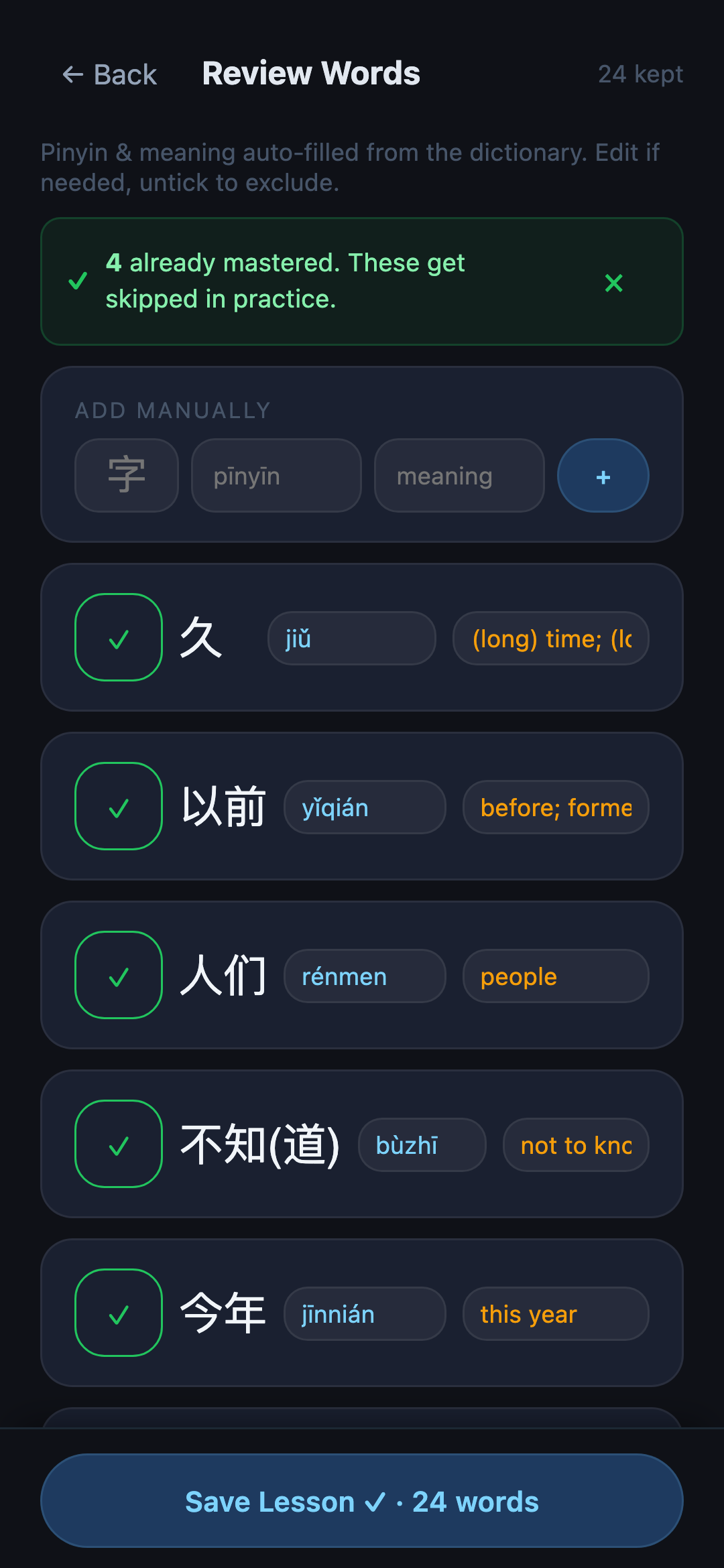
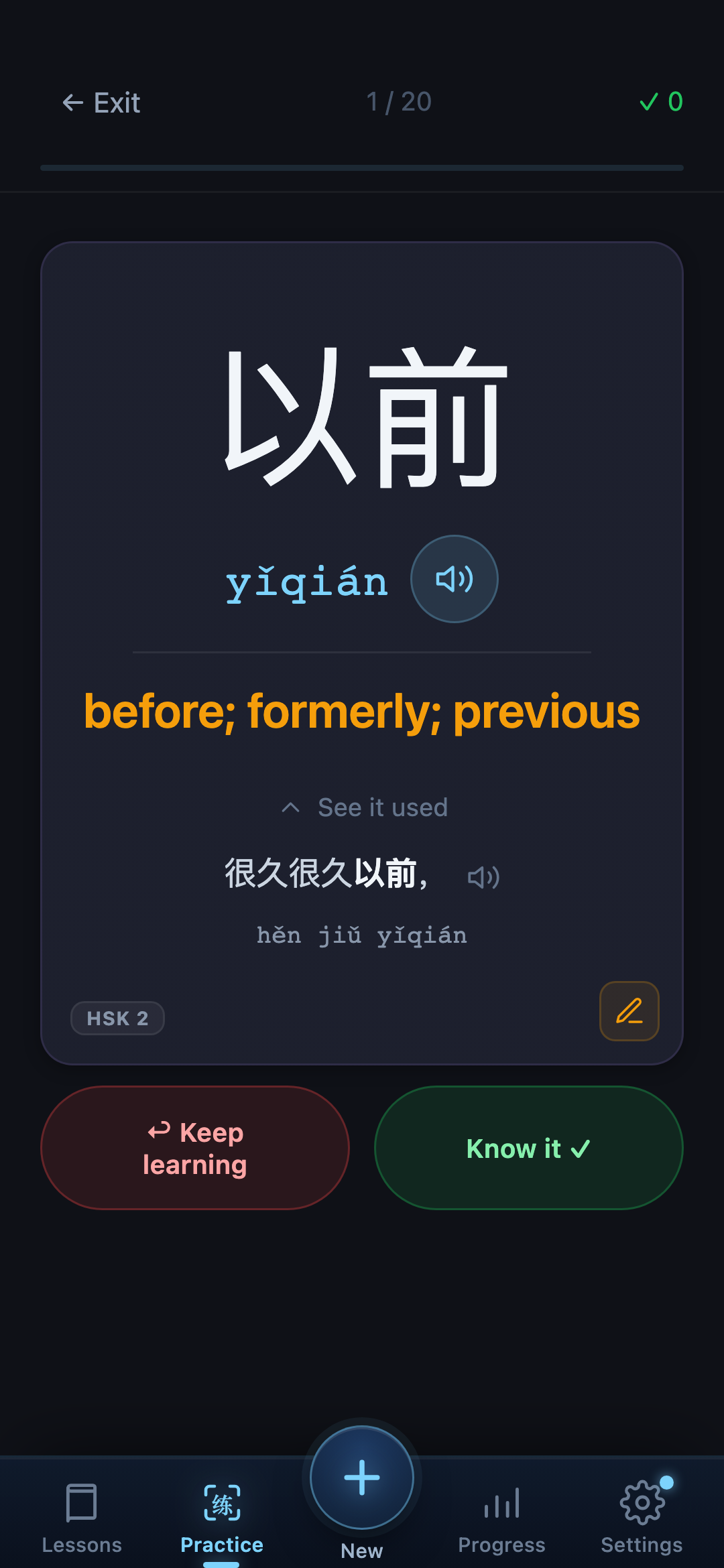
Kezi started as a fix for my own forgetting. I kept learning Chinese and losing it a week later, so I built a little offline-first app to make the characters stick. No backend, no sign-up, nothing collected. Just something that works on my phone when there is no signal. On a high-speed train, on a flight, or in one of those toilets that mysteriously has none.
Building it was the easy part. Claude did the heavy lifting, I argued with it about my schema, and the thing came together fast. Then I tried to actually ship it. And that is where the map ran out.
Because nobody warns you about the hundred small traps between “it works on my laptop” and “it’s in someone’s pocket.”
Take storage. localStorage is the obvious place to keep a learner’s progress, and it is a quiet trap: on iOS, Safari can evict it after about seven days of not opening the app. I only shipped to the Play Store so far, so it never actually bit me. But I could see it waiting for the day I add iOS, so I built on durable storage from the start rather than refactor my way out of it later. On a desktop browser none of this shows up. It only matters on a real device, over real time.
Then the WebView. Once you wrap a web app into a native one, things you thought were solved go strange. Downloads, share, the clipboard, notifications, they all behave a little differently inside the native shell. Silently. And only on the device, not in the browser where you were testing.
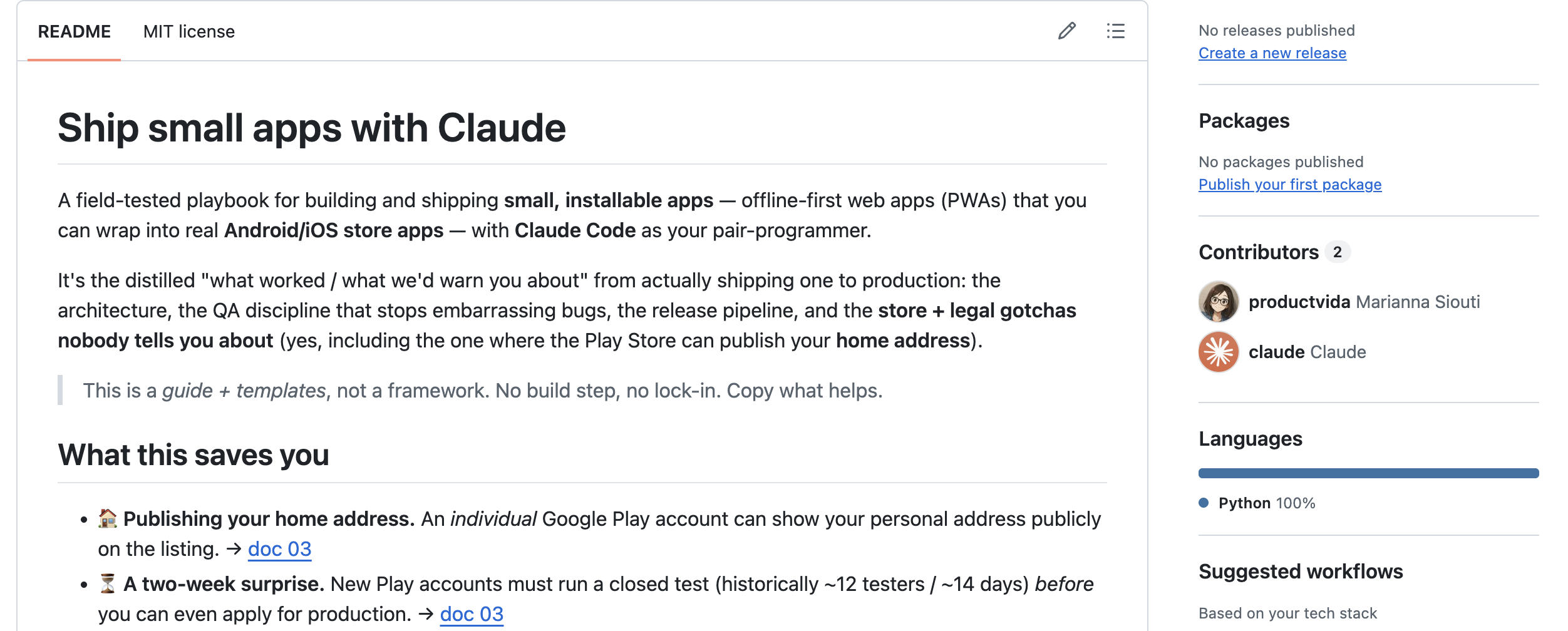
Then the app stores, which are their own adventure. A new Google Play account has to run a closed test, roughly twelve testers for around fourteen days, before you are even allowed to apply for production. And a small detail that made me sit up: an individual Play account can show your personal home address publicly. You find these things out at the worst possible moment, usually the day you wanted to launch.
None of it was hard, exactly. It was just unknown. Most of them cost me a day I had not budgeted for, and each one was invisible until it bit.
So I did the thing I always do when something bothers me enough. I wrote it down.
It is called Ship Small Apps with Claude, it lives on GitHub, it is free, and there is no build step and no lock-in. Copy what helps. It is the map I wish someone had handed me: the offline-first architecture, the QA and WebView gotchas, the release and app-store landmines, and how I actually work with Claude on this kind of project. That last part matters more than people think. I keep a CLAUDE.md as a reusable brief so the model knows the project cold, and a SESSION-STATE.md so it can pick up where we left off instead of starting from zero every session. Capacitor to wrap the app, Playwright to catch regressions before they reach a store build. The one habit I would tattoo on a beginner: run an automated check before every build, and test the real paths on a real device, never just the desktop browser.
Here is the thing I keep coming back to, and it connects to everything else I have been writing lately. AI has made the building almost free. You can go from idea to working app in a weekend now. But the last mile, the judgment, the actual device someone holds, the small cruel details that decide whether a real person keeps using your thing, that is still all human. The tools got faster. Caring about the person on the other end did not get automated.
So if you have a small app in you, a private little tool that fixes your own forgetting or your own annoyance, build it. It is more possible than it has ever been. Just go in with the map, and test it on a real phone before you celebrate.
The guide takes you up to launch. The part I am walking into now is the one after: acquisition, actually getting Kezi in front of the people who would love it. GTM is a whole different mountain, and I am at the bottom of it. As I learn my way up, I will keep updating the repo, so if that part interests you too, keep an eye on it.
The guide is here: https://github.com/productvida/ship-small-apps-with-claude
And if you want to see the app that taught me all of this the hard way, that is Kezi. It is live at learnwithkezi.com and free on the Google Play Store.